

Have you ever wondered how generative AI is changing creative work? Generative AI is a type of technology that can create new content, such as text, images, or designs, based on patterns it learns from existing material. It does not think like a human, but it can help people produce ideas and content much faster.
So, the creative work is changing because these tools can handle repetitive tasks or suggest new directions. But if you are a beginner, then you have to read what Artificial Intelligence is, and then you can understand generative AI.
For example, a designer can quickly generate several versions of a poster, or a writer can get a draft outline in minutes instead of hours. This lets creators spend more time on improving and refining their work rather than starting from scratch. So we see that the generative AI can make our work faster than before.
Therefore, the rise of AI content generation also sparks a bigger question: Can machines replace human creativity, or do they only make it stronger? Many believe that the answer lies in collaboration.
When people combine their judgment, imagination, and taste with the speed of these tools, creativity becomes more productive and exciting. So, in today’s article, we will discuss how creative industries need to adapt to improve the workflows and learn how to use these tools responsibly. The goal is to enhance original ideas and productivity, but not to replace them.
What Is Generative AI? And How It Works
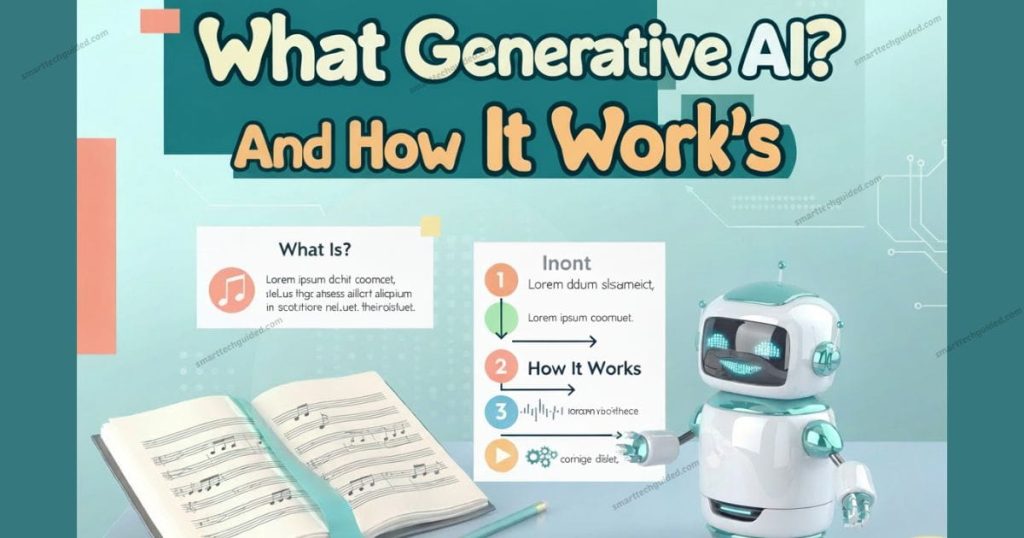
It is a type of technology that can create text, images, audio, or video by learning patterns from large amounts of training data. Generative AI is changing creative work by helping people produce content faster and explore new ideas. So, professionals can use generative AI tools to improve their content creation, improve speed in their workflows, and in this way, they try new ideas without starting from scratch. So, now we will come to know how it will work.
How Generative AI Works
Generative AI works using machine learning models that study training data to recognize patterns. It predicts what comes next in text or which colors, shapes, or sounds go well together. For example, A musician can create new melody ideas, or a filmmaker can plan several scene storyboards in minutes. This helps people make new ideas, create things for each person, and do their creative work more quickly. Hope you can understand how the model works. Let’s see the core technologies behind it.
Core Technologies Behind Generative AI
So, the Core technologies are the main tools that make generative AI work. These technologies learn from lots of examples to help people create text, pictures, and sounds. So, it means Generative AI does not think on its own, but it can copy patterns and suggest new ideas. So, here is how it works in simple steps:
-
Learning from Data: The system looks at many examples, like books, images, or music. This is called training data.
-
Finding Patterns: It notices how words, colors, or sounds usually go together.
-
Making Predictions: It guesses what comes next, like the next word in a sentence or the next shape in a drawing.
-
Generating Content: It creates something new using what it learned from the patterns.
Example: Imagine you want to write a short story. The system looks at many stories it has learned, finds patterns in the way sentences are made, and then helps you create a new story in minutes. So, this is how technology works behind it. Now, we move on to the next part of our discussion, Rise of AI.
The Rise of AI in Creative Work
Have you ever thought about how people create faster and smarter than before? Generative AI is changing creative work by helping people move beyond doing everything by hand. It gives ideas, suggests options, and completes repetitive tasks, so creators can focus on using their imagination.
So, this change is opening a new world of possibilities, where machines and humans work together, making creative projects faster, easier, and more exciting. That’s why it’s getting a hot topic in this era now. Let’s see why this shift is happening. Here is the supporting discussion below:
1. From Automation to Augmentation
At first, these tools were mostly for automation, which means they did simple, repetitive tasks. For example, a program could check spelling or resize images automatically. Now, they do more than just simple work; they help people create new ideas faster. This is called augmentation. It’s like having a helper that suggests ideas while you make decisions.
2. A New Era of Cooperation Between Humans and Machines
Today, creativity happens best when humans and machines work together. A writer might get a draft story from a tool, then improve it with their own imagination. A designer can try many design ideas in minutes and pick the best one. This human machine collaboration allows creative work to be faster, smarter, and more fun.
3. Why in 2025–2026 Is a Turning Point for Creative AI
The years 2025 and 2026 are a turning point for creative AI because the tools are now easier to use, faster, and more capable than ever. They no longer need technical experts to operate; anyone in creative work can try them. So, these tools can now create text, images, videos, and even music, all in one platform.
Creative industries like marketing, design, publishing, and entertainment are adopting these tools so quickly because they save time, reduce costs, and help teams explore more ideas. For example, a marketing team can generate multiple ad designs in minutes, or a video editor can create several scene variations without starting from scratch.
Because of these changes, creative professionals are learning to use AI as a partner, not a replacement. This combination of human creativity and machine speed is why 2025–2026 marks a new era where generative AI is part of everyday creative work.
How Creative Work Tools Are Reshaping Roles and Skills
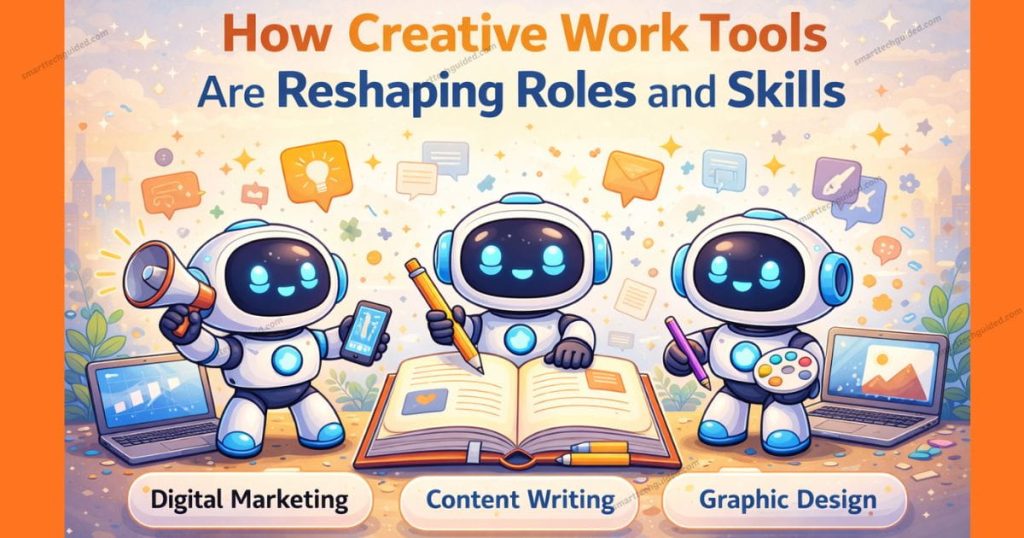
Now, we discuss how these tools reshape our skills as creative tools become smarter and faster, the way people work and the skills they need are also changing. These tools are not replacing humans; they are helping people do more, try new ideas, and focus on creativity.
1. Evolution of Creative Skills
So, in the past, creators spent most of their time doing repetitive tasks, like rewriting text, resizing images, or testing designs. Now, these tools take care of routine work, so people can spend more time thinking, experimenting, and improving their ideas. But the need for skills like problem solving, storytelling, and visual thinking is becoming more important than just knowing software commands. If you don’t know how to use these tools properly, they can hurt your work. So, use them wisely to stay productive.
2. Emerging Roles in the Creative Industry
So, you have to know what the Creative Industry is to understand its importance. The creative industry includes jobs where people make ideas into products, stories, or experiences. This can be designing posters, writing books, making movies, creating games, or planning marketing campaigns. People in this industry usually work in teams, combining ideas, skills, and creativity to produce something that others enjoy or use.
As these creative tasks grow more complex, new tools are helping people work faster and explore more ideas. This change has created new roles in creative teams to manage how tools are used and to make sure the work stays original and high-quality.
Some of the new roles include:
- Content Strategist: Plans what content to create and how to make it interesting for people.
- Prompt Specialist: Guides tools to produce better ideas or content.
- Creative Director: Leads the creative process, combining human ideas with tool suggestions to create the final product.
These roles help teams use new tools effectively, improve creativity, and make sure the final work is useful and exciting.
3. Rethinking Creative Responsibilities
Today, people in creative work spend more time making decisions, improving ideas, and adding their own personal touch. Many tasks that used to take a lot of time, like testing different designs or rewriting content, are now easier to handle. This change lets creators focus on what really matters: experimenting with new ideas, taking creative risks, and making work unique.
With these tools helping in the background, responsibility shifts from just doing repetitive tasks to thinking critically and guiding the work. Creators are now expected to combine their imagination with smart choices, making their contributions more original and valuable.
4. Hybrid Skillets: Creativity + Technical Knowledge
A hybrid skillset means combining two types of skills: being creative and knowing how to use modern tools. It’s not enough for you to just have ideas; creators also need to understand how to use tools that help bring those ideas to life.
Having a hybrid skill set helps people in creative work in many ways. It saves time, because they can quickly turn ideas into drafts. It also improves quality, because they know how to choose the best version and make it better. Most importantly, it keeps the work original, because creators can add their own style and imagination on top of what the tools provide.
For example, a designer might use tools to create several poster drafts in minutes, but they decide which one looks best, adjust colors, and add unique elements to make it truly their own. This mix of creativity and technical knowledge makes a creator more effective and valuable in their work. So, the next question is: how can we expand creative possibilities and make our work even more exciting? Let’s take a closer look
Expanding Creative Possibilities Through Tools
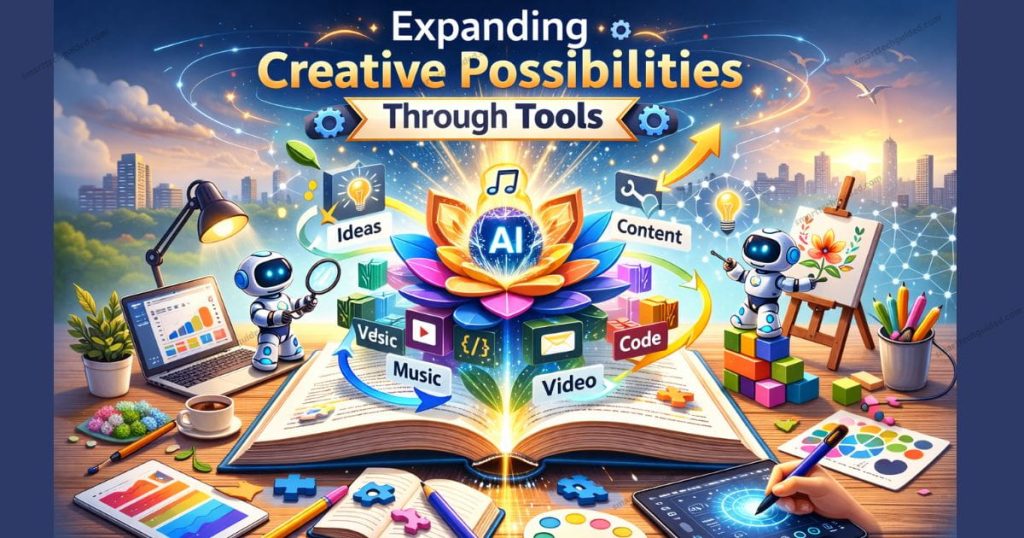
Have you ever thought about how creators can come up with more ideas and make their work better than before? Modern creative tools let people explore new possibilities and try things they couldn’t do on their own. Let’s see how these tools help in different ways.
1. Modular and Scalable Creativity
Modular creativity means you can build ideas in small parts and then combine them to make something bigger. Scalable creativity means you can create more ideas quickly without losing quality. For example, a designer can make separate elements for a website, like buttons, banners, and icons, and then mix them in different ways to create a complete design faster. This approach saves time and gives you more options to experiment. So, Modular and scalable creativity lets you build small parts, combine them, and create more ideas faster, giving you more freedom to experiment
2. Faster Experimentation & Iteration
Tools let you try many ideas quickly. Instead of spending hours on one version, you can test several versions in minutes. For instance, a writer can draft multiple story openings and pick the best one. This will help you to make your creative work faster and less stressful, helping you to discover new directions you might not have thought of.
3. Personalized and Adaptive Content
Personalized and adaptive content means making your work fit the needs or interests of different people. It changes depending on who is seeing it so that it feels more meaningful and interesting.
So if you are a creators you can use this approach to customize stories, ads, designs, or lessons for different groups. For example, a marketing team can create one ad for children, another for teenagers, and a third for adults. Each version speaks directly to the audience, making it easier to connect with them. So, this is helpful because it keeps people engaged and makes your work more effective.
4. Enhancing User Experiences
This will help you to enhance user experiences means making the people who use your work feel more engaged, happy, and interested. The goal of creativity is not just to create something, but to delight the audience and make it memorable.
As a creators you can improve experiences by adapting their work to what people like. For example, a game designer can create different levels or challenges depending on how players interact with the game, making it more fun and exciting. Similarly, a storyteller can adjust a story or presentation to keep the audience involved and curious. And then this approach is important because it makes your work more valuable, enjoyable, and memorable, leaving a positive impact on the audience.
FAQ
What is generative AI, and how is it impacting creative work?
Generative AI is a tool that helps people create text, images, music, and more faster. It impacts creative work by giving new ideas, speeding up tasks, and helping people focus on improving their original work rather than doing repetitive jobs.
Will generative AI replace human creatives?
No. These tools assist humans, but imagination, judgment, and originality come from people. They help creators work faster and try more ideas, but humans still guide the process and add the personal touch that makes work unique.
What are some real-world examples in creative industries?
Designers can make multiple poster drafts quickly, writers can create story outlines, and game designers can test different levels for players. Marketing teams can prepare several ad versions. These tools help creators explore ideas faster and reach their audience effectively.
What challenges and ethical concerns come with using these tools?
Challenges include copying work from others, mistakes in content, and over-reliance on tools. Ethical concerns focus on fairness, originality, and responsibility. Creators must check their work and make sure it’s honest, safe, and respectful to others.
How can organizations adapt their creative teams for these tools?
Teams can train staff to use tools effectively, combine creativity with technical skills, and redesign workflows. Assign roles like content planners or creative directors to guide the work. The goal is to help humans and tools work together efficiently while keeping creativity strong.
Sum Up
So, at the end of our discussion, have you ever thought about how creative work is changing right now? Here’s what you should remember:
- Creativity is no longer just about finishing tasks; it’s about thinking, experimenting, and adding your own ideas.
- Modern tools help people try more ideas, work faster, and make their work meaningful.
- Jobs and skills are changing; creators now mix imagination with smart use of tools.
- There are challenges, like staying original and responsible, but using tools wisely can make your creativity even stronger.
- The most important part? Humans still guide the work, add originality, and make it special.
Hope you can understand how creative tools open up amazing possibilities, but it’s your ideas, choices, and personal style that make your work truly shine. So, if you’re a creator, don’t wait, try new ways to create, explore your ideas, and let your imagination guide every project!



Leave a Reply