
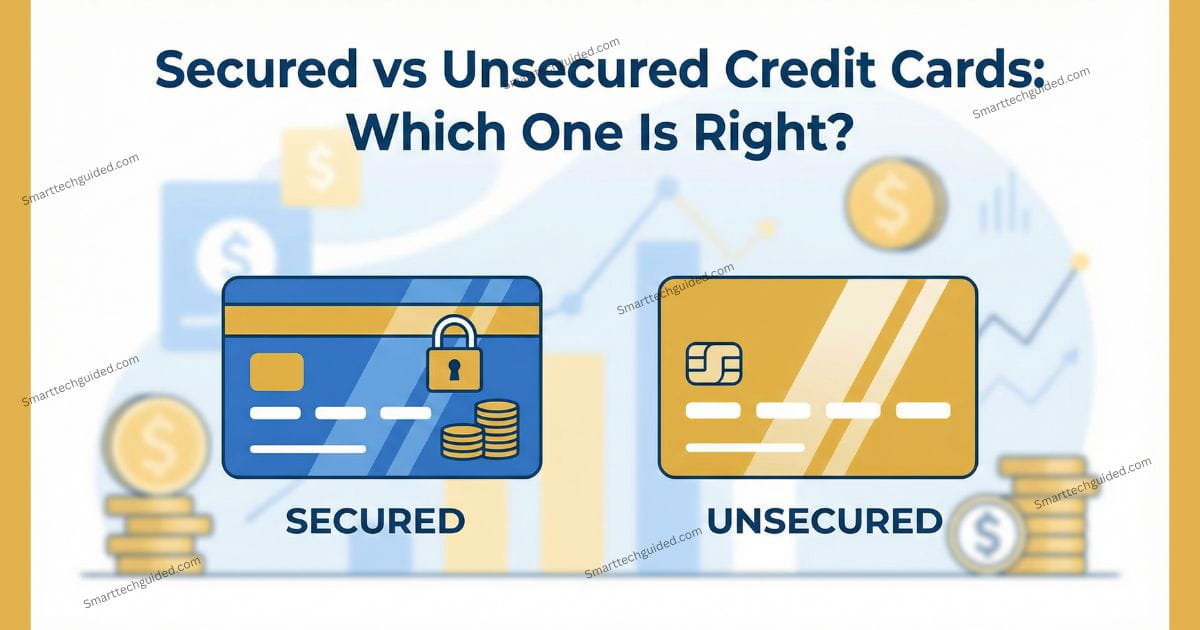
If you’re new to credit, choosing the right credit cards can be confusing. Understanding secured vs unsecured credit cards is the first step to making smart decisions. A secured credit card requires a deposit, which acts as your credit limit. This makes it easier for people with little or no credit history to get approved and start building their credit. On the other hand, an unsecured credit card doesn’t require a deposit, but approval depends on your credit score and financial history.
Knowing the difference matters because each type serves different needs. Secured cards are ideal for beginners or those rebuilding credit, while unsecured cards are better if you already have some credit history and want more benefits like rewards or higher limits. By using either type responsibly paying bills on time and keeping balances low you can steadily improve your credit score and gain financial freedom.
What Are Secured Credit Cards?
As we discuss secured vs unsecured credit cards so, Secured credit cards are a type of credit card that requires a cash deposit as collateral. This deposit usually sets your credit limit and reduces the risk for the lender. These cards are designed to help people build or rebuild credit safely while using a card like a regular credit card.
How Secured Credit Cards Work
When you get a secured card, you typically deposit $200–$500 (sometimes more). That deposit becomes your credit limit. You use the card to make purchases, and payments are reported to credit bureaus. Responsible use paying on time and keeping balances low helps you build a strong credit score over time.
Who Should Consider Secured Credit Cards
- Beginners with little or no credit
- People with past credit problems
- Anyone wanting to safely build or rebuild credit
Pros and Cons
Pros:
- Easy approval, helps build credit, low starting limits for beginners
- Can help qualify for unsecured credit cards in the future
- Teaches responsible credit habits and financial discipline
Cons:
- Requires a deposit, lower limits than unsecured cards, some fees may apply
- Deposit is tied up and not available for other uses
- Some cards may have higher interest rates than standard credit cards
What Are Unsecured Credit Cards?
Now,as we proceed in our topic secured vs unsecured credit cards the Unsecured credit cards are credit cards that don’t require a cash deposit. Approval depends on your creditworthiness, income, and credit score. Unlike secured cards, these offer more flexibility, higher credit limits, and often additional perks such as rewards or cashback. Payments are reported to credit bureaus, helping you build or maintain a strong credit history when used responsibly.
How Unsecured Credit Cards Work
With an unsecured card, your credit limit is determined by your financial history, not a deposit. You make purchases up to that limit and pay off your balance each month. Timely payments improve your credit score, while late payments can hurt it.
Who Should Consider Unsecured Credit Cards
- People with an existing credit history
- Applicants with good or fair credit scores
- Anyone who wants more perks and flexibility without putting down a deposit
Pros and Cons
Pros:
- No deposit required
- Higher credit limits than secured cards
- Access to rewards, cashback, and other benefits
- Builds credit history for future financial opportunities
Cons:
- Harder to get approved without prior credit
- Risk of overspending since no deposit is required
- Some cards charge annual fees and some are not charging any annual fee
- Higher interest rates may apply if balances aren’t paid in full
Key Differences Between Secured Vs Unsecured Credit Cards
| Feature | Secured Credit Cards | Unsecured Credit Cards |
|---|---|---|
| Deposit Required | Yes, refundable | No |
| Credit Approval | Easier for beginners | Requires credit history or good score |
| Credit Limit | Often equal to deposit | Based on creditworthiness |
| Rewards | Limited | Often available (cashback, points, travel) |
| Fees | Some have small fees | Can include annual fees, higher APR |
The main difference between secured vs unsecured credit cards are the boils down to risk for the lender. Secured cards require money upfront, making them safer for the bank. Unsecured cards rely on your credit history to determine risk.
How Secured vs Unsecured Credit Cards Help Build Credit
Both secured vs unsecured credit cards can help you build or improve your credit when used responsibly. Here are the supporting information below which will help you to built more credits.
Using Secured Credit Cards to Build Credit
- Your payments are reported to credit bureaus, establishing a record of responsible use.
- Consistently paying on time helps create a positive credit history.
- Shows lenders that you can manage debt responsibly, which can improve approval chances for future credit.
Using Unsecured Credit Cards to Build Credit
- On-time payments directly boost your credit score.
- Responsible usage over time may lead to higher credit limits.
- Helps you qualify for better credit cards or loans in the future.
The key for both types is consistency: always pay on time, keep balances low, and monitor your credit regularly. This disciplined approach gradually strengthens your credit profile.
Who Should Use Secured Cards
Secured credit cards are best for people who are just starting out with credit or looking to rebuild their credit safely.
- First-time credit users: You can start with a small deposit and gradually build a credit history.
- Credit re builders: If you’ve had credit challenges in the past, secured cards offer a low-risk way to restore your credit.
- People with limited income: Approval is often easier because the deposit reduces the lender’s risk.
For Example: Jessica, 23, had no credit history and wanted her first credit card. She opened a secured card with a $300 deposit, used it for small purchases, and made all payments on time. Within six months, her responsible use helped her qualify for an unsecured card with higher limits and rewards. So, Using a secured card responsibly can be a stepping stone to better credit opportunities.
Who Should Use Unsecured Cards
Unsecured credit cards are ideal for people who already have some credit history and want more flexibility or perks.
- Applicants with fair or good credit: Approval is easier when you have a credit history.
- People seeking rewards or benefits: Many unsecured cards offer cashback, points, or travel perks.
- Those who prefer higher credit limits: Without a deposit, limits are often higher than secured cards.
Example: Mike, 28, had a fair credit score and some existing credit history. He applied for an unsecured rewards card with no deposit, got approved, and started earning cashback on groceries and gas. By using the card responsibly, he continued to build his credit while enjoying the card’s benefits.
Unsecured cards are a good choice for those ready to take their credit to the next level while enjoying added perks.
Tips for Choosing Between Secured and Unsecured
Choosing between secured vs unsecured credit cards depends on your credit history, goals, and financial needs. Here are some tips to help you decide:
1. Check Your Credit History
- No or poor credit? Start with a secured card to build a credit record safely.
- Good or fair credit? An unsecured card may be a better option, offering higher limits and perks.
2. Consider Your Goals
- Want to build credit safely? Secured cards provide a low-risk path.
- Looking to earn rewards or travel perks? Unsecured cards often provide points, cashback, or other benefits.
3. Review Fees and Interest Rates
- Secured cards may have small fees, but the deposit reduces lender risk.
- Unsecured cards may come with annual fees or higher interest rates, so weigh the benefits carefully.
4. Start Small, Grow Fast
With a secured card, responsible use can lead many banks to upgrade you to an unsecured card, giving you higher limits and more perks as your credit improves.
How to Use Any Card to Build Credit
so, secured vs unsecured credit cards usually is not a big deal Whether you have a secured and unsecured credit card, using it wisely is key to building a strong credit history.
- Pay on time: Your payment history is the most important factor in your credit score. Late payments can hurt your score significantly.
- Keep credit utilization low: Use less than 30% of your available credit to show lenders you can manage debt responsibly.
- Avoid multiple applications: Applying for too many cards at once can negatively impact your approval chances.
- Monitor your credit reports: Check regularly to ensure all payments are reported accurately and there are no errors.
Even small, consistent use like paying for groceries or subscriptions and paying it off in full can have a big impact over time, helping you build a positive credit history and improve your score steadily.
FAQ’s
Can you get an unsecured card with no credit history?
It’s challenging but possible for beginners. Some unsecured credit cards allow approval with proof of income, even without prior credit history.
Is a secured card refundable?
Yes, your deposit is fully refundable when you close a secured credit card account, provided you’ve paid off your balance and followed the card’s terms responsibly.
Do secured cards have rewards?
It usually takes 6 to 12 months of responsible use to build a solid credit history and become eligible for unsecured credit cards.
Can both card types improve credit scores?
Yes. Making on time payments and using your card responsibly are the most important factors in building and maintaining a strong credit history.
Sum Up
Choosing between secured vs unsecured credit cards depends on your credit history, financial goals, and comfort level. If you have no credit history or past credit issues, a secured card is a low-risk, effective way to start building credit. If you already have good credit and want rewards, higher limits, and flexibility, an unsecured card may be the better choice. Using any card responsibly—paying on time, keeping balances low—helps improve your credit, save money, and even earn perks. Learn more about fast approval of credit cards. Hope this guide finds you well.






Leave a Reply