

Digital payments are now a part of everyday life, and understanding Venmo instead of PayPal highlights why people prefer one platform for sending money, splitting bills, and managing transactions with friends, family, and businesses efficiently.
Venmo has grown especially popular among younger users and casual spenders, whereas PayPal remains entrenched in broader global commerce and business transactions. The reasons for this shift go beyond simple brand recognition; they include usability, social features, fee differences, and how each platform fits modern mobile lifestyles.
In this guide, we’ll unpack reasons people choose Venmo over PayPal, the benefits of using Venmo instead of PayPal for Amazon or for any other payment, and exactly what sets the two services apart in the competitive world of digital wallets.
Most importantly, this article gives you clear insights into Venmo popularity over PayPal, explained, backed by market viewpoints and real usage trends, so you can understand which payment app makes sense for your needs.
Understanding Venmo vs PayPal User Preference
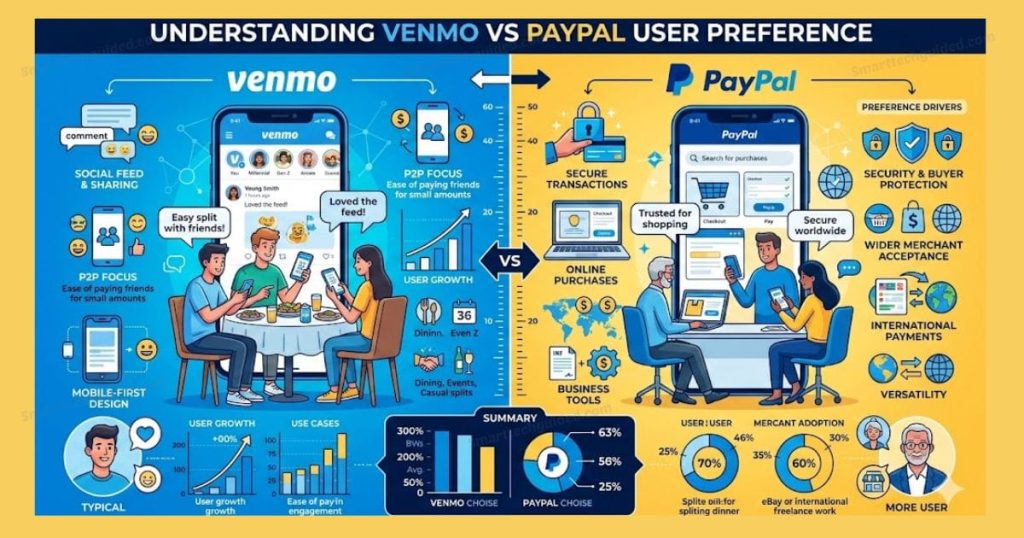
People choose payment apps based on how and why they send money. Venmo focuses on peer-to-peer transfers, like paying friends back or splitting a meal, while PayPal serves a wider audience, including online shopping, international payments, and business transactions.
So, Younger users, especially millennials and Gen Z, prefer Venmo because it feels casual and social, making everyday payments simple and connected. PayPal, with its long history and reliable tools, remains the go-to for businesses and global transactions, offering trust and security that casual apps may lack.
Overview of Venmo and PayPal
Think about paying a friend back for coffee. You open Venmo instead of PayPal, and the money is sent in seconds. Venmo keeps things simple, adding a social touch with emojis, a shared feed, and fast, easy transfers.
On the other hand, if you’re running a business or sending money internationally, PayPal is usually the better choice. It offers strong tools for businesses, global payment options, and a more traditional interface for handling complex transactions.
Even though both apps belong to the same company, their purposes are different. For everyday social payments, people often prefer Venmo instead of PayPal, while PayPal is better for larger, professional, or international payments.
User Demographics: Who Chooses Venmo instead of PayPal
Venmo is most popular with younger users, especially those under 35, who use it for everyday transactions like splitting rent, sharing a meal, or paying friends back quickly. Its mobile-first design and social feed make sending money feel easy, casual, and even a little fun.
PayPal, on the other hand, appeals to a wider group. Business owners, international shoppers, and people handling larger or professional payments rely on its secure platform, multi-currency support, and merchant tools.
Overall, people often pick Venmo instead of PayPal for fast, social, peer-to-peer payments, while PayPal is the go-to for business, online shopping, or global transactions.
How User Experience Influences Preference
Ease of use is a major factor in payment app preference. Venmo’s intuitive mobile interface, minimal steps to send money, and contact syncing make it especially easy for casual users to adopt and stick with the service. PayPal’s interface, while powerful, can feel more complex due to its broader functionality and business‑oriented features.
This difference in user experience often tips the scale for users who primarily need simple, quick payments.
4 Reasons People Choose Venmo Over PayPal
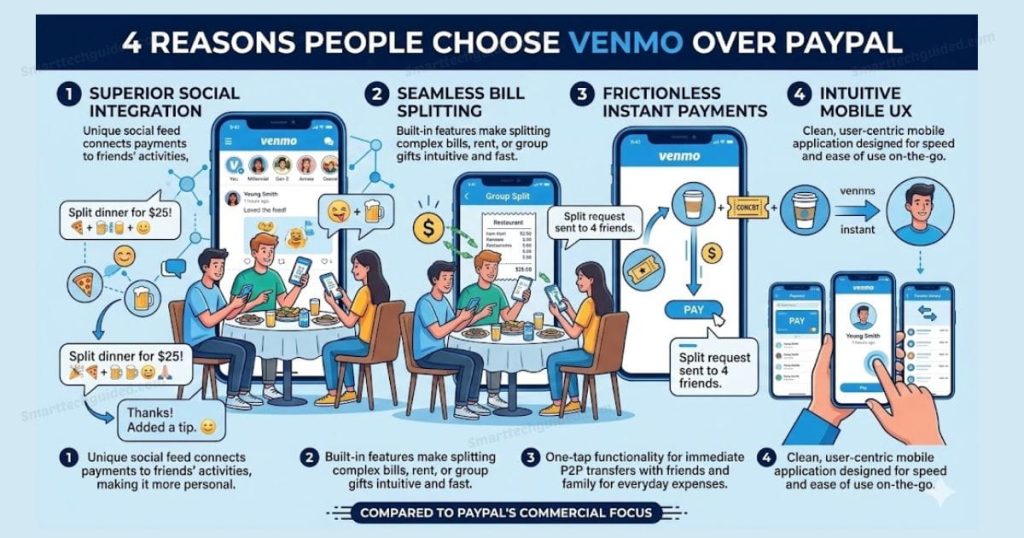
There are clear practical and emotional reasons behind trending preferences in the Venmo vs PayPal user preference discussion. Venmo’s mobile-first mindset and social enhancements make asking “why are people using Venmo instead of PayPal” a question tied to lifestyle, not just technology.
1. Seamless Peer‑to‑Peer Payments
One of the strongest reasons people choose Venmo over PayPal is its emphasis on peer‑to‑peer payments. Venmo makes it incredibly simple to send or receive money with just a few taps on your phone, without needing to deal with lengthy menus or complicated invoice systems.
This convenience is ideal for informal financial interactions like paying a friend back for coffee, and it removes barriers that slow down traditional wallet payments.
2. Social Interaction Features on Venmo
A unique advantage of Venmo is its social feed, where users can add emojis, messages, and comments to their payments. While this might seem trivial, it adds a layer of engagement that makes everyday transactions feel more like social communication. Many users enjoy the feed as they would a social network.
These features blur the line between finances and social connectivity, which contributes to Venmo’s popularity over PayPal, especially among younger and socially active users.
3. Lower Fees for Certain Transactions
Another reason people choose Venmo over PayPal is related to fees. For basic transactions like sending money from a bank account, Venmo typically doesn’t charge fees, while PayPal’s fee structure varies based on transaction type and destination.
For users who mostly move money between friends or family, Venmo’s lower cost, especially on everyday transfers, can be more appealing.
4. Integration with Mobile Banking Apps
Venmo’s focus on mobile use and seamless banking app integration also helps it outshine PayPal for casual users. The platform allows simple linking of bank accounts and cards, letting users send money without ever leaving their phone’s interface.
This convenience, combined with instant notifications and contact syncing, supports the idea that Venmo vs PayPal user preference is heavily driven by mobile ease.
4 Benefits of Using Venmo Instead of PayPal
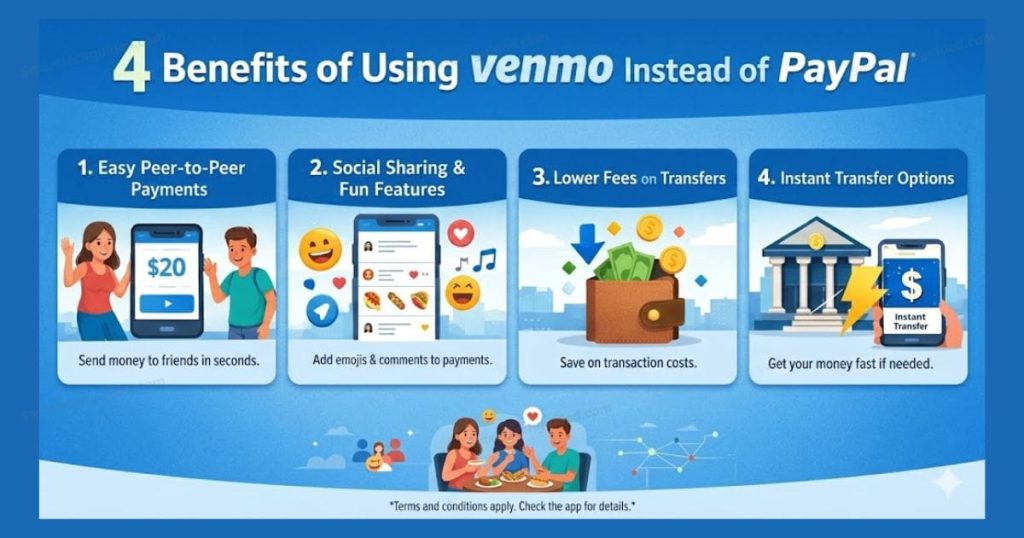
When people compare the benefits of using Venmo instead of PayPal, many of the advantages relate to everyday usage rather than business or global transactions.
1. Speed and Convenience of Transactions
Venmo is designed to make money movement both fast and easy. Sending money to another user typically takes just seconds, with a simple interface that gets out of your way.
This kind of speed and efficiency is especially appealing for users who value quick financial interactions without extra steps.
2. User‑Friendly Mobile App Design
The Venmo mobile app is often recognized for its clean layout and intuitive controls, which reduce friction for users who aren’t tech‑savvy. It syncs with contacts automatically and makes payments feel almost as easy as texting.
That’s a real advantage for people who just want something that works without learning complex menus or settings.
3. Instant Transfers vs Standard Transfers
Venmo gives users choices between standard (no‑fee) and instant transfers to their bank accounts. While instant transfers incur a small fee, many users appreciate the option for speed when needed.
This flexibility helps Venmo compete not just with casual wallet apps but also with more traditional banking tools.
4. Splitting Bills and Payments Easily
One of the practical perks of Venmo is its easy bill‑splitting features. Whether you’re dividing rent with roommates or sharing dinner costs, Venmo simplifies the math and avoids awkward money‑exchanging moments.
This real‑world convenience is a major factor in the reasons people choose Venmo over PayPal.
Venmo Popularity Over PayPal Explained
Understanding Venmo’s popularity means looking beyond functionality; it’s how people feel about using the app.
- Social Media‑Like Activity Feed: Venmo’s social payment feed gives users a familiar experience similar to social networks, where they can interact with friends and view transactional activity. This is a core reason why some users prefer Venmo’s experience; it feels personal, social, and engaging.
- Appeal to Younger Generations: Millennials and Gen Z, growing up with mobile‑first technologies, are naturally attracted to apps that feel modern and interactive. Venmo’s tech‑centric design meets this preference better than PayPal’s more traditional interface. Hence, Venmo’s popularity over PayPal often refers to cultural trends as much as practical benefits.
- Marketing and Brand Perception: Venmo has become synonymous with peer payments in popular culture. Its brand image is youthful and casual, contrasting with PayPal’s more business‑oriented identity. This branding helps draw new adopters into using the app casually rather than thinking of it as financial software.
- Influence of Peer Recommendations: People often adopt technology based on what their friends use. Because Venmo is popular in friend groups and social circles, users naturally gravitate toward it, especially when splitting bills or sending money between contacts. This network effect strengthens preference trends over time.
Venmo Features Compared to PayPal
To further understand Venmo features compared to PayPal, it helps to break down what each platform offers.
1. Payment Notifications and Real‑Time Updates
Venmo pushes instant notifications for payments, which keep users informed about financial activity instantly. PayPal also notifies users, but Venmo’s mobile‑first design makes updates feel smoother and more integrated into everyday phone use. This is another example of how convenience drives preference.
2. Security Features and Fraud Protection
Both apps use encryption and authentication standards, but PayPal generally offers more comprehensive fraud detection, buyer protection, and dispute resolution tools, especially for commercial transactions.
While Venmo is secure for personal transfers, its protections are more limited, which can matter if you’re dealing with unknown buyers or higher‑value payments.
3. Business and Merchant Payment Options
PayPal’s strength lies in its acceptance across thousands of online merchants, global currency support, and business tools, making it essential for e‑commerce. Venmo, though expanding into some merchant features, is still primarily focused on personal payments within the U.S.
Understanding these distinctions helps clarify why someone might choose one platform over the other.
4. Additional Tools: Venmo Debit Card vs PayPal Debit Card
Venmo offers debit and credit card options tied to your account, allowing users to spend directly from their Venmo balance, a feature that makes daily use even easier. PayPal also offers similar cards, but positions them with more business flexibility.
Sum Up
In the Venmo instead of PayPal user preference debate, there’s no “one size fits all.” Venmo shines for fast, social, peer‑to‑peer transactions with lower fees and an enjoyable mobile experience. PayPal excels in global reach, business support, and robust security for larger and commercial payments.
If you’re focused on everyday personal use and enjoy a social, mobile environment, Venmo is often the preferred choice. If you need wide acceptance, international payments, or business tools, PayPal remains indispensable. Either way, understanding how each platform works helps you choose the right payment method for your financial needs.








Leave a Reply