

Imagine logging into an online class where ancient civilizations rise in front of your eyes in stunning 3D, science experiments unfold right on your desk, and complex math problems turn into interactive visual puzzles. Sounds exciting, right? That’s the real power of augmented reality in online classes. If you’ve ever felt that remote learning can be dull or disconnected, AR is changing the game. Instead of just watching and listening, students can explore, touch, and interact with digital content layered over the real world. This hands-on experience makes lessons more memorable, improves understanding, and keeps learners motivated from start to finish.
In this article, you’ll discover 5 powerful ways augmented reality in online classes boosts learning, explore some of the best AR tools for virtual classrooms, and get practical tips for teachers and students to make every online lesson more engaging and effective.
What Is Augmented Reality in Online Classes?
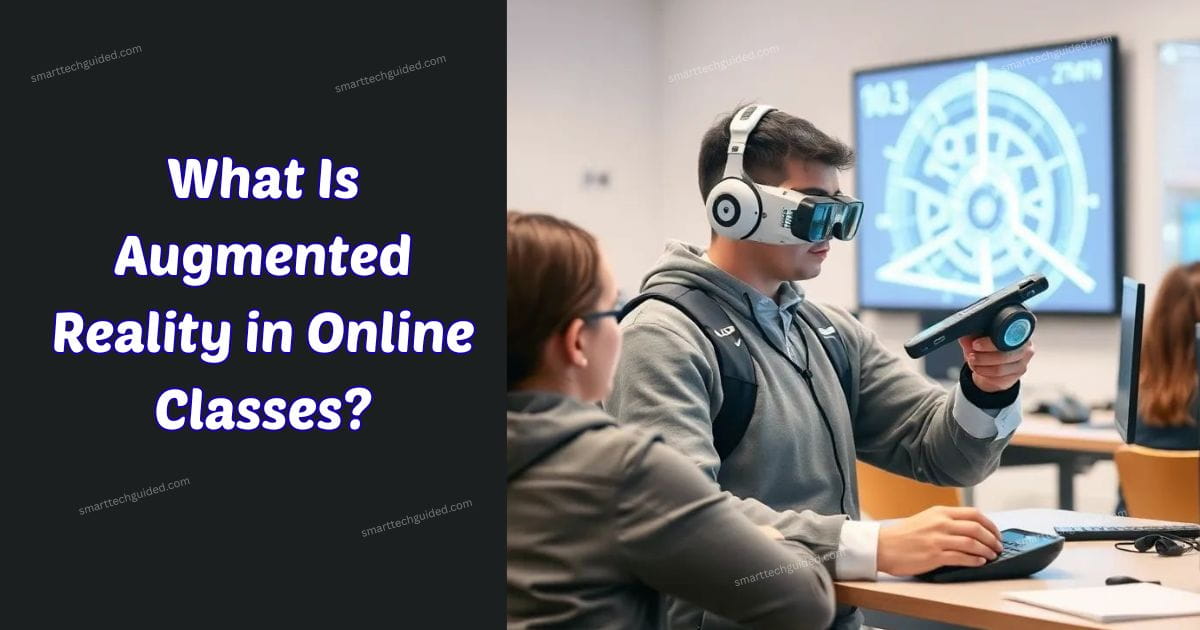
Augmented reality (AR) overlays digital content—images, animations, and interactive elements—onto the real world. Unlike virtual reality, which immerses you in a fully digital environment, AR enhances your surroundings while keeping you grounded in reality. In online classes, AR can:
- Turn static slides into interactive 3D models
- Allow students to explore virtual labs at home
- Create gamified learning experiences
- Give teachers tools to deliver lessons in more engaging ways
Simply put, AR bridges the gap between theory and hands-on experience, making remote learning real, memorable, and effective.
Why AR in Online Learning Matters?
Remote education often struggles with engagement. Students can feel isolated, distracted, or disconnected. This is where AR in online learning makes a huge difference.
-
Boosts Student Engagement – Interactive AR lessons grab attention. Students aren’t just passive viewers—they manipulate objects, explore environments, and solve challenges.
-
Improves Knowledge Retention – Hands-on, visual experiences help students remember concepts better than traditional lectures.
-
Encourages Active Learning – Students learn by doing, experimenting, and exploring, which develops problem-solving and critical thinking skills.
-
Supports Different Learning Styles – Whether your student is a visual, auditory, or aesthetic learner, AR adapts to multiple learning preferences.
-
Makes Online Classes Interactive – From virtual science labs to 3D historical tours, AR transforms passive video calls into immersive learning experiences.
Top AR Tools and Apps for Remote Education
Here are some of the leading virtual classroom tools that bring augmented reality in online classes to life, helping teachers create immersive lessons and enabling students to explore concepts in a more interactive, hands-on way. These AR-powered platforms turn traditional remote learning into engaging digital experiences that improve understanding, boost participation, and make complex topics easier to visualize and remember.
-
Google Expeditions – Take virtual field trips anywhere in the world, from ancient ruins to outer space.
-
Merge EDU – Hands-on AR and VR lessons in STEM, allowing students to manipulate 3D objects.
-
Quiver Vision – Turns colouring pages into interactive 3D animations, ideal for younger learners.
-
Co Spaces Edu – Enables students and teachers to create interactive AR experiences and virtual worlds together.
-
JigSpace – A library of 3D interactive lessons, from anatomy to engineering, perfect for demonstrations.
Using these tools, teachers can design interactive online lessons with AR that captivate students and make learning enjoyable.
5 Ways Augmented Reality in Online Classes Boosts Learning
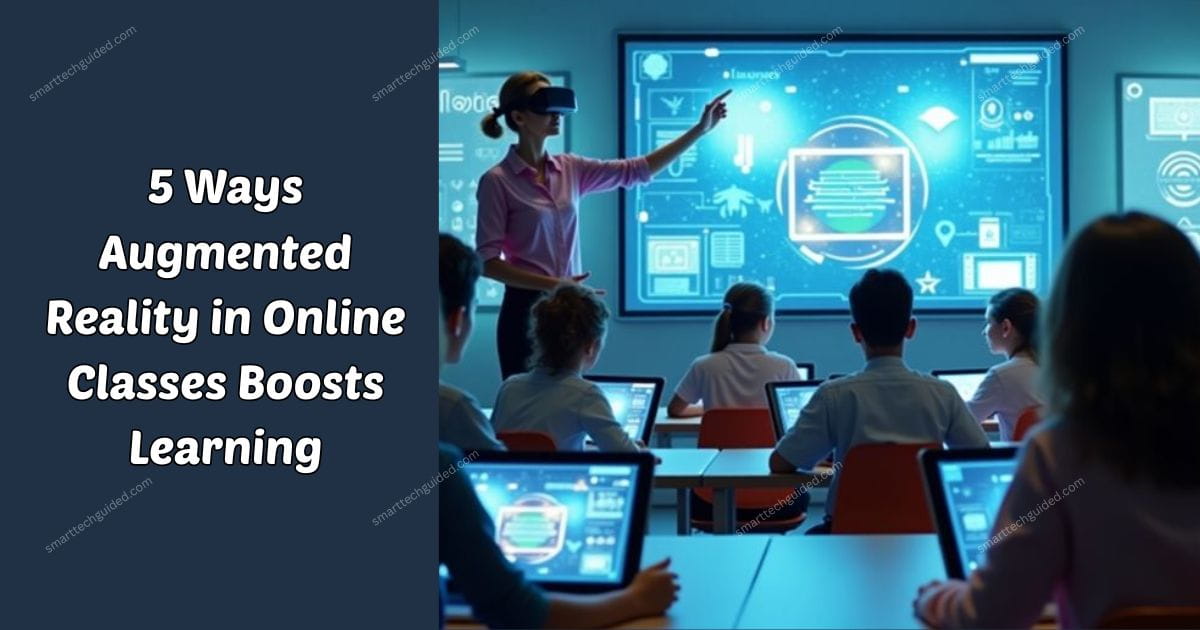
- Visualises Abstract Concepts – Challenging topics like molecular structures, complex geometry, or historical events become easier to grasp when students can explore them in interactive 3D. Instead of imagining ideas, learners can see and rotate models, zoom in on details, and understand how everything fits together in real time.
- Encourages Safe Experimentation – AR allows students to test ideas, run simulations, and explore different outcomes without real-world risks. From virtual science labs to historical “what-if” scenarios, learners can make mistakes, learn from them, and build confidence through hands-on discovery.
- Fosters Real-Time Collaboration – Many AR platforms let multiple students join the same virtual environment. This shared space encourages teamwork, discussion, and problem-solving, helping learners communicate better and feel more connected—even in remote classrooms.
- Enhances Motivation Through Gratification- Gamified AR lessons turn learning into an exciting challenge. Progress badges, interactive tasks, and visual rewards keep students focused and motivated, reducing boredom and increasing active participation.
- Supports Multiple Learning Styles – Whether a student learns best by seeing, hearing, or doing, augmented reality in online classes adapts to different learning preferences. This personalized approach helps lessons “stick” longer and improves overall understanding and retention.
Practical Tips for Implementing AR in Online Classes
To get the most out of AR in remote education:
- Start Small – Introduce AR in one subject or lesson before full integration.
- Choose the Right Tools – Select apps that align with your curriculum and are easy to use.
- Combine AR With Traditional Learning – AR works best as a supplement, not a replacement.
- Encourage Interaction – Have students manipulate objects, take quizzes, or present AR projects.
- Collect Feedback – Ask students which AR experiences worked best to improve lessons.
Common Misconceptions About AR in Online Learning
- AR is Expensive: Many apps are free or affordable. Even simple AR features improve learning.
- Requires Advanced Tech: Most AR tools work on smartphones or tablets—no fancy equipment needed.
- Only for STEM Subjects: AR can enhance history, art, language, and social studies too.
Understanding these misconceptions helps educators adopt AR confidently.
AR vs Traditional Online Learning
The Future of AR in Remote Learning
The future of augmented reality in online classes is filled with possibilities that go far beyond today’s virtual classrooms. As technology continues to evolve, AR will shift from being a “nice-to-have” feature to a core part of how students learn, explore, and grow. With smarter AI integration, personalized learning paths, and more affordable AR tools, students will experience lessons that adapt to their pace and learning style. Teachers will be able to design immersive, real-time activities that turn complex subjects into interactive journeys, making remote education more engaging, inclusive, and effective for learners around the world.
- AI-Powered AR Tutors – will act like personal learning companions, adapting lessons in real time based on a student’s progress, strengths, and challenges. Instead of one-size-fits-all content, every learner will experience a path designed just for them.
- Fully Gamified Curricula – will turn subjects into interactive journeys, where students unlock new levels, earn rewards, and solve real-world challenges. This approach doesn’t just make learning fun—it builds problem-solving skills, confidence, and long-term motivation.
- Cross-Platform Collaboration – will connect classrooms across the globe, allowing students to work together in shared AR environments. Imagine science experiments conducted with peers from different countries or history lessons explored inside virtual landmarks.
The future isn’t about watching lessons it’s about stepping inside them, engaging all your senses, and creating learning experiences that truly last.
FAQs
- What devices do I need for AR in online learning?
Most AR apps work on smartphones, tablets, or laptops with cameras. AR glasses are optional. - Are AR lessons effective for all ages?
Yes! From elementary school to university, AR can be tailored to any grade or subject. - Can AR replace teachers?
No. AR enhances lessons but teachers remain essential for guidance and mentorship. - Do AR apps cost a lot?
Many are free, with affordable premium versions for schools or students. - Which subjects benefit most from AR in online classes?
STEM subjects, history, art, and language learning all see major improvements when AR is used.
Augmented reality in online classes isn’t just a passing trend—it’s reshaping how education feels, looks, and works. Instead of staring at flat screens and static slides, students step into lessons where ideas come alive, curiosity is rewarded, and understanding grows through real interaction.
For teachers, AR opens the door to creating immersive experiences that inspire questions, spark discussions, and turn complex topics into moments of discovery. For students, it transforms learning into an active journey one where they explore, experiment, and truly connect with what they’re studying.
Now is the perfect time to start. Explore powerful AR apps for online classes, test innovative virtual classroom AR tools, and begin designing lessons that don’t just inform but inspire. With augmented reality, education becomes more than a task to complete. It becomes an experience to remember.






Leave a Reply